
Who this page is for: hospital and health-system art programmes
Hospitals and healthcare systems, on this page, means the owner, project team or appointed art consultant buying art for an acute hospital, a new wing or bed tower, an outpatient or ambulatory centre, a cancer or heart centre, or a network of facilities that share one set of artwork guidelines. The decision is rarely one person: a committee of the project manager, architect, interior designer, facilities manager and administrators makes the selections 4, often with an art consultant on the design team, and the art budget is set with the furniture, lighting and signage budgets early in construction 4.
You usually specify subject rules per area, with nature imagery in patient rooms and abstract work reserved for public and staff areas 1; a standard frame for the whole system 1; surfaces that can be cleaned in patient-care areas 2; and quantities by wing, floor and room type. You ask three things of a supplier: will the subjects pass our guidelines, can one source cover the quantity without the same image on every floor, and can deliveries follow a phased handover.
Not this page? Independent living, assisted living, memory care and small clinic groups are on senior living & retirement communities. If you are the consultant assembling the programme for a health system, art consultants covers how we work behind your name. If you are the FF&E agent buying the art line against a schedule, see FF&E procurement agents.
Will the subjects pass an art committee that follows evidence-based guidelines?
What goes wrong. Suppliers built for hotels lead with abstract and dramatic work. Healthcare artwork guidelines ask for nature imagery in patient rooms (landscapes, water, plant life) and warn against complex, chaotic or ambiguous images 1; a 2021 review of the clinical literature found that most studies show patients prefer natural scenes and figurative art, while abstract work also had positive effects in some settings and preference varies by situation 3. A committee sent a catalogue of four hundred abstracts has nothing to approve.
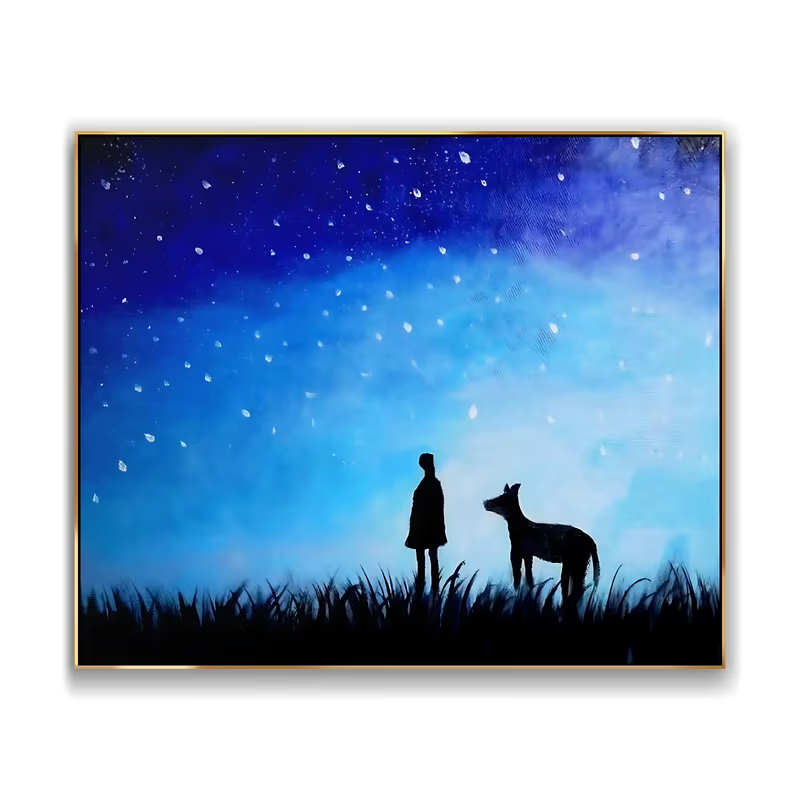
What we do. 829 of the 1,455 works carry Landscape, Floral & Botanical or Seascape subjects, 343 are painted in Hyperrealism or Impressionist styles where the subject reads at a glance, and 637 are tagged Peaceful or Calming. For patient rooms, 309 Bedroom-tagged works are nature subjects and 241 of those are also Peaceful or Calming. Because nothing is stock, the committee approves a reference image, size and palette before the painter starts. The Recolour route keeps the composition and paints it in the palette you give, so a work the committee likes but finds too saturated is repainted in the muted range the guidelines ask for, and a colour a wing has excluded is left out. A work with a figure or an animal the committee prefers to avoid is not adapted; we pick a different reference.
The catalogue image the committee reviews is a photograph of a previously painted work. The piece for your wing is painted only after that reference is signed off, and the committee sees it at each stage before it ships, so the record it approved and the canvas that arrives are the same thing.
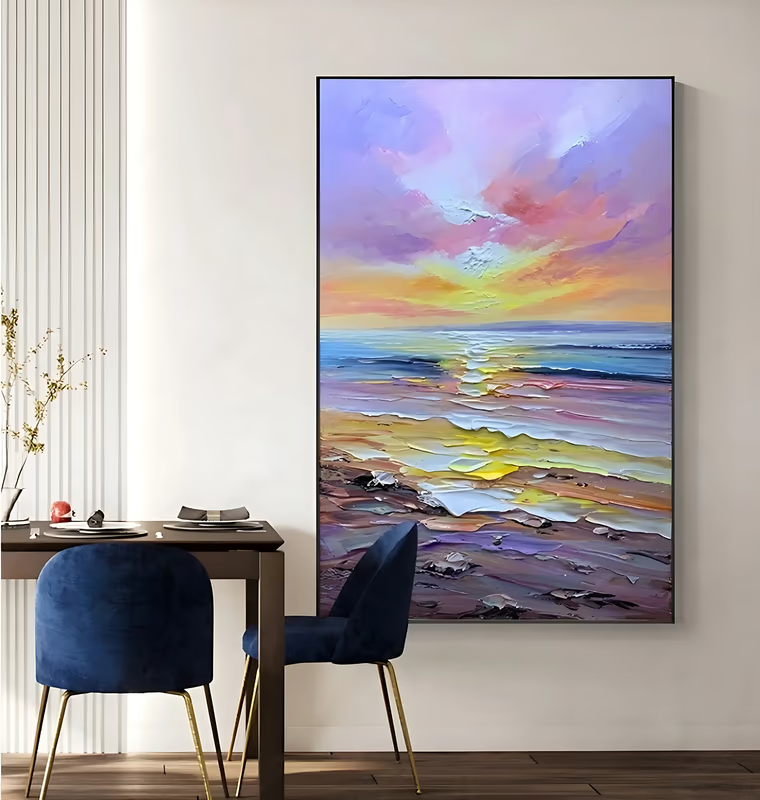
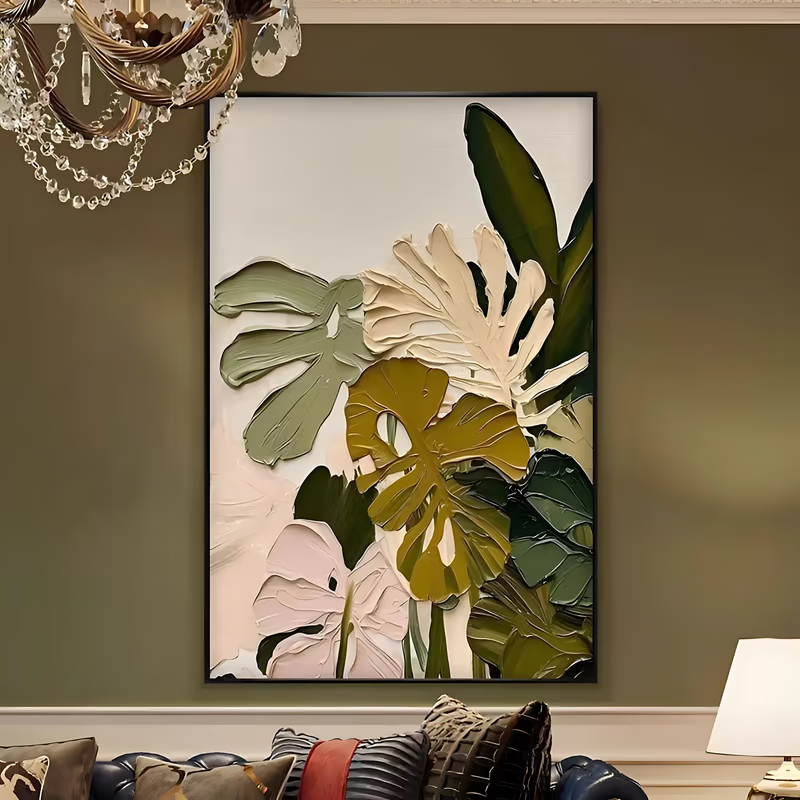

Can one supplier cover 300 patient rooms and every corridor without the same three images on every floor?
What goes wrong. At hospital quantities most suppliers fall back on a small print library, so the same image hangs in every fourth room and every corridor reads the same from the lift. Guidelines also warn that artwork must not interfere with the wayfinding systems patients rely on in a large building 2, and a corridor series that ignores the floor's colour code does exactly that.
What we do. Every piece is painted to order, the minimum is one and volume pricing starts at ten, so quantity is a schedule question, not a stock question. Two routes from /custom do the work:
- Vary builds a family of related originals off one reference, so the eight positions on one corridor read as a series without repeating, and adjacent patient rooms differ.
- Recolour paints the same family in one palette per floor or wing. If floor 3 is signed in blue and floor 4 in green, the corridor paintings carry the same colours, and the art reinforces the wayfinding instead of fighting it.
The catalogue holds 447 works tagged Corridor & Circulation and 435 of them are vertical, the proportion of a wall between two doors; 264 of the corridor works are nature subjects. For patient rooms, a family of six to eight designs per unit type, rotated across the floor and recoloured by wing, gives 300 rooms without a repeat next door. Batches are painted and delivered by wing or floor against the written schedule, so the first tower to open is not waiting for the last.
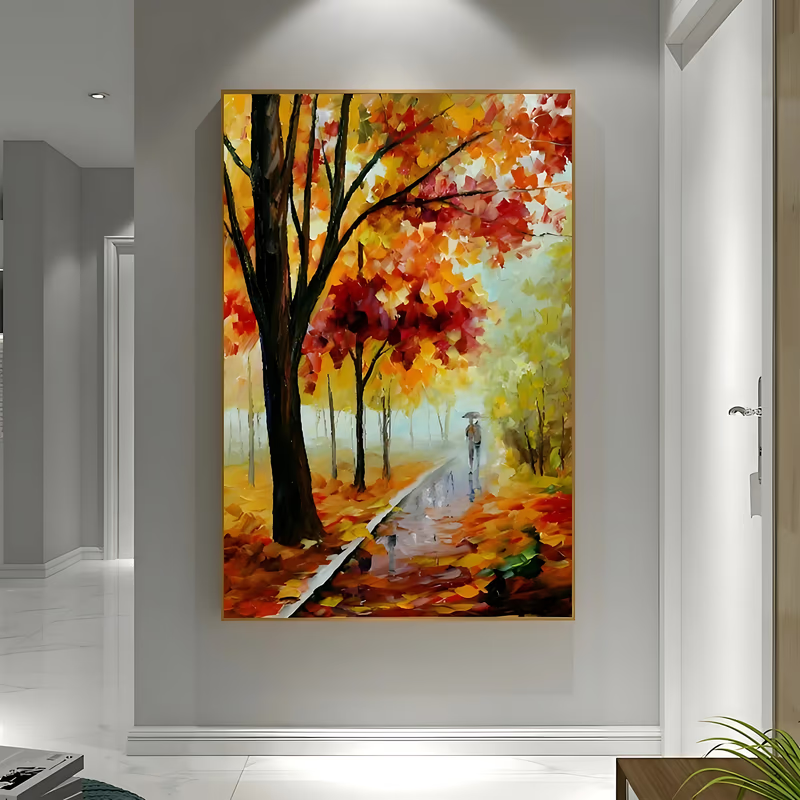
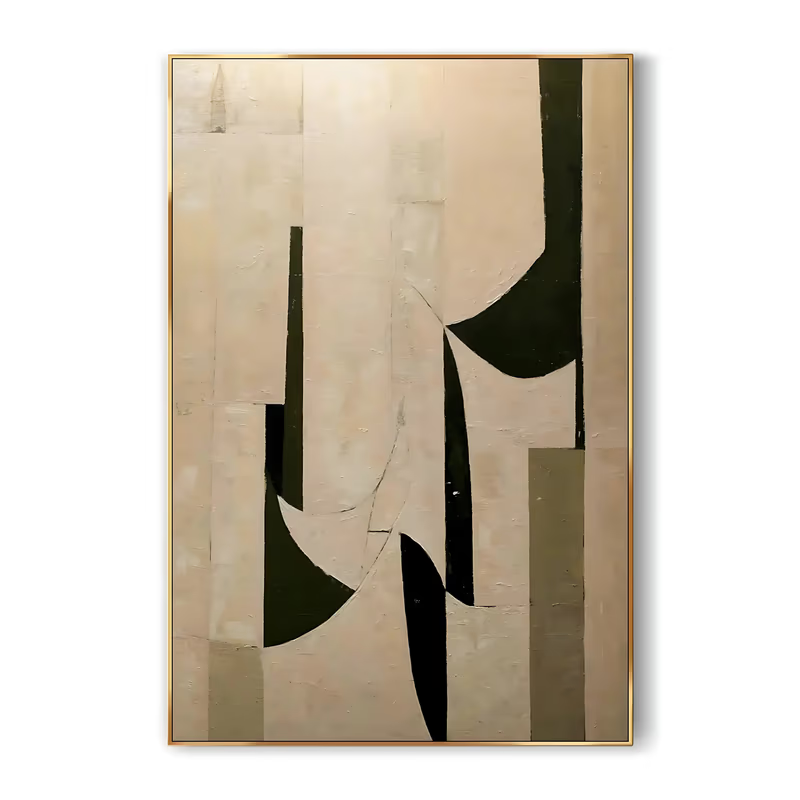
What goes in the atrium, the waiting areas, the quiet room and the staff spaces?
Guidelines give public and staff areas more latitude than patient rooms: abstract work is acceptable there for visual interest, while patient rooms stay with nature 1. The catalogue's commercial room tags map onto a hospital plan as follows.
- Atrium and main entrance. 557 works are tagged Lobby & Reception; 95 are panoramic and 132 landscape works are listed at 200 cm or longer. Any of them is painted at 2 m, 3 m or the width of a double-height wall, with proportions adjusted by the painter rather than stretched.
- Waiting areas and registration. 115 lobby-tagged floral works carry the Uplifting mood, the register usually wanted where people wait.
- Quiet room, chapel, family rooms. 365 works are tagged Spa & Wellness and 326 of them are Peaceful or Calming; Textured & Plaster is the leading style there (112 works), low in contrast and without a subject that asks anything of the viewer.
- Staff lounges, boardroom, offices. 79 Meeting & Boardroom works are geometric and 99 Workspace & Office works are Abstract style, for the areas where guidelines allow abstraction 1.
- Café and dining. 124 Restaurant & Bar works are floral and Uplifting.
Each area is specified as its own line with its own finish, so the atrium piece arrives stretched and ready to hang while the patient-room canvases arrive rolled for the local framer.
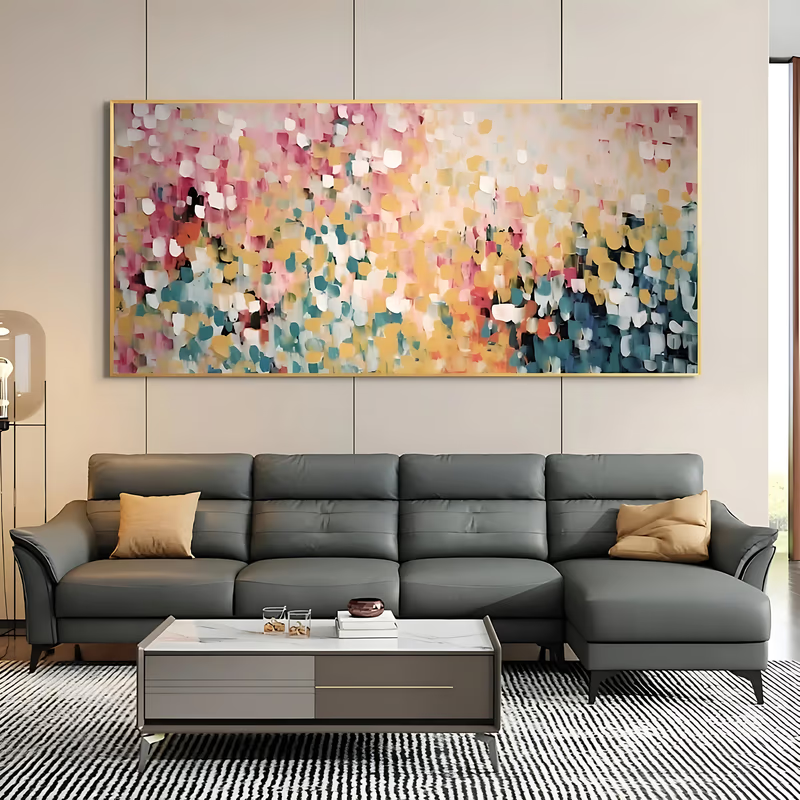
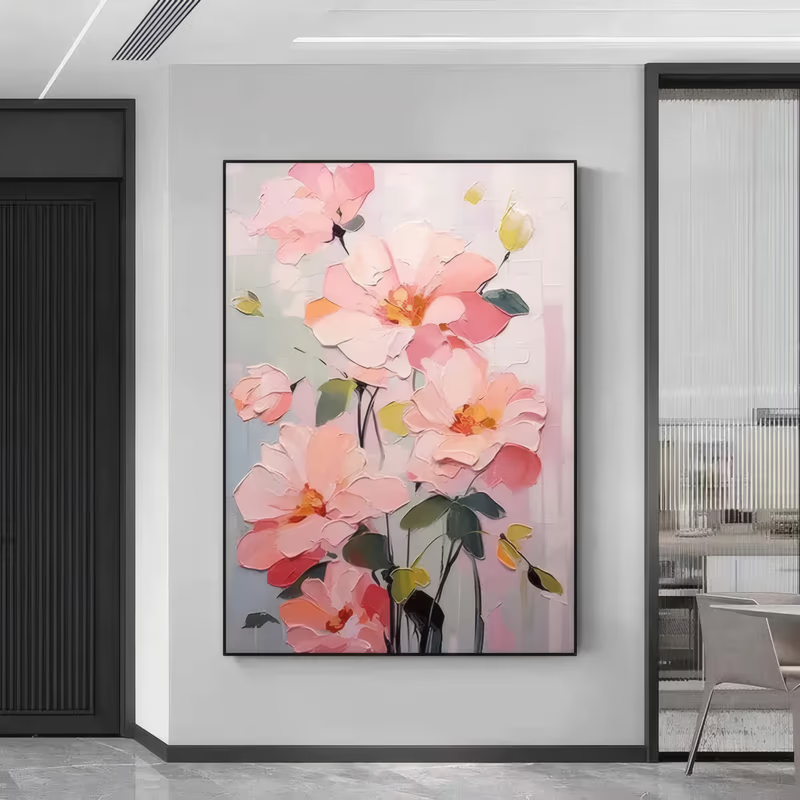
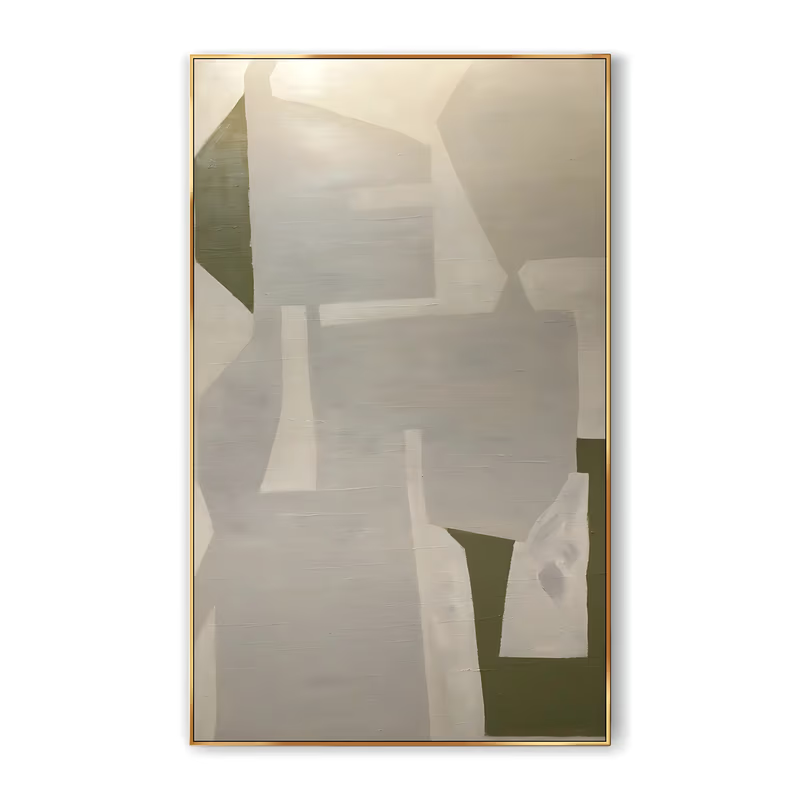
How does a committee approve a painting that does not exist yet?
What goes wrong. A committee cannot sign off two hundred originals from a supplier's website, and a batch that arrives different from the sample three weeks before opening has no remedy. Guidelines recommend building an artwork reference library and standardising the approvals 1, and procurement teams are advised to involve staff in selection 2; a supplier who sends finished crates with no stage in between makes both impossible.
What we do. Four steps, each verifiable:
- Sample. The minimum order is one piece, so a sample is an ordinary order. Most hospital teams put it in the mock-up patient room and check it against the finishes and the lighting there.
- Reference approval. The committee approves the catalogue code, the size, the palette (or the Recolour brief) and the finish for each line before any painting starts. That record, with the reference image, is what you file in the reference library.
- Progress photos or video at each stage. We continue only after you approve; colour and composition are corrected on the easel, not after delivery. For a family painted with Vary, the approved first piece is the reference the painter works from for the rest.
- Signed and certified. Every piece is signed by the artist and ships with a certificate of authenticity for the asset register.
One honest note: hand-painted means each piece in a family differs in the way hand-painting differs. The stage photos exist so that difference is seen and accepted before shipping, not discovered on site.
Which finish, and what do facilities and infection control need to know?
What goes wrong. Healthcare guidance asks for a standard frame across the system 1, for surfaces in patient-care areas that can be cleaned 2, and, in behavioural health, for tamper-resistant mounting and frames with no removable parts 1. Suppliers who imply their canvas meets those requirements put the facilities manager in a difficult position at inspection.
What we do. We supply hand-painted canvas in three finishes and we state plainly where our scope ends.
| Finish | What arrives | Typical use in a hospital |
|---|---|---|
| Rolled canvas | Unstretched in a tube | Patient rooms and corridors, where your local framer applies the system's standard frame, glazing and hanging hardware |
| Frameless stretched | Stretched on bars, ready to hang | Atrium, waiting areas, staff spaces |
| Framed (gold, silver, black, white or wood) | Boxed with hanging hooks | Public areas where a frame is wanted at handover |
We do not supply glazing, sealed or antimicrobial coatings, security or ligature-resistant hardware, and we make no cleanability, fire or flame-spread claims for the canvas. Where a patient-care or behavioural-health area requires those, order the works rolled and have the frame, glazing and fixings specified and fitted locally to the system's standard. That keeps one framing spec across every facility, which is what the guidelines ask for 1, and keeps the compliance question with the party who can answer it.
How an order runs for a hospital or health system
Healthcare art procurement is usually described as four phases, consultation, selection, procurement logistics and installation, running from several weeks for a small installation to several months for a facility-wide programme 2. Our part sits inside the third phase and runs like this:
- Brief. You send the schedule by area (see the next section). Free.
- Quote within 1 business day. Each line priced by code, size, route and finish; there is no public price list. Project delivery dates are committed in writing at quotation.
- Sample or mock-up room. One piece, painted and shipped in 10–13 days, checked in the mock-up room with the finishes.
- Reference approval. The committee signs off each line's code, size, palette and finish.
- Painting, about 1 week per batch. Progress photos or video at each stage; we continue after you approve. A tower of 300 rooms is painted in batches by wing so approvals and deliveries stay in step with the fit-out.
- Transit, 3–7 days. Free, insured, by DHL, FedEx or USPS, tracked, to your consignee (the fit-out contractor, the framer or the loading dock), with the certificate of authenticity per piece.
The 10–13 days door to door is the figure for one piece or one batch; a whole-programme date is agreed in writing against your handover sequence. Damage in transit is covered by insurance and the piece is repainted and reshipped; a piece damaged in service years later can be repainted to the same code, size and palette because nothing was ever stock.
What to send us for a hospital-wide quote
The quote comes back complete the first time when the brief carries the same objects your committee already holds:
- A schedule by area: patient rooms by unit type and count, corridor positions per floor, lift lobbies, atrium, waiting areas, quiet room, staff spaces, café. A spreadsheet or the FF&E art schedule is ideal.
- Your artwork guidelines, or the subject rules per area: what is allowed in patient rooms, what is excluded, whether figures and animals are acceptable, any palette limits.
- The wayfinding colour scheme by floor or wing, as paint codes or a signage drawing, if you want the corridor families recoloured to it.
- Wall sizes for the fixed positions (atrium, lift lobbies, waiting walls) with ceiling height and what sits below; standard sizes are enough for rooms and corridors.
- Finish per area: rolled for local framing, frameless stretched or framed, and the system's standard frame if we should match its colour.
- Handover sequence and dates, and the consignee (contractor, framer or dock) for each phase.
- Whether you want a sample first for the mock-up room.
Send it through the quote form or by email with the schedule attached; we reply within 1 business day with a line-by-line quote and a proposed delivery sequence. Reference images from the catalogue can be listed by code (for example HA#044 or IA#1181), or you can describe the subject and palette and we propose references for the committee.
Also for outpatient centres, children's hospitals, rehabilitation and hospice
The same mechanics apply to smaller and specialist facilities; only the subject rules and quantities change.
- Outpatient and ambulatory centres are mostly waiting and consulting rooms: the waiting-area cuts above, at 20 to 60 pieces, usually sit inside one batch and one delivery.
- Children's hospitals and paediatric wings. The review literature notes that children preferred bright, colourful nature views with a clear subject 3. The catalogue has 45 Colorful-style animal works and 51 animal subjects tagged Uplifting; they are painted at the smaller sizes and recoloured to a ward's palette on request.
- Rehabilitation and long-stay units are closer to senior living: recognisable landscapes, a family per corridor, colour by floor.
- Hospice and palliative care draw on the quiet-room cut: Textured & Plaster and soft landscapes tagged Peaceful, low in contrast, painted at the scale of a bedside wall.
For any of these, the minimum order is still one piece, the sample route is the same, and a facility that later adds a wing can reorder the same codes, sizes and palettes because the original reference approval is on file.
What we do not claim
A facilities team trusts the supplier that states its limits before being asked. Ours:
- No stock and no prints. Every piece is painted after the committee’s approval, so nothing ships tomorrow; the first sample is 10–13 days away and a tower is delivered in phases against the handover sequence.
- No fire, flame-spread, cleanability or antimicrobial claims. We supply painted canvas. Glazing, sealed frames, security hardware and any rated finish are specified and fitted locally.
- No clinical claims. The guidance we cite is the published design literature 13; we do not claim that our paintings produce a patient outcome.
- Master works are not adapted. Works by our senior partnered artists are kept as painted, with provenance, exhibition history and a photograph with the artist (see /custom); they suit a donor wall or boardroom, not a recoloured corridor series.
The painters train inside Siji Art Hub's exhibition programme (50+ exhibitions, with professors of the Guangzhou Academy of Fine Arts among the exhibitors) and the hub's collection exceeds 11,000 works. That is the provenance line for the hospital’s asset register: original, hand-painted for this project, signed, with a certificate of authenticity per piece.
A 240-bed hospital tower with 8 patient floors — illustrative schedule
An illustrative schedule built from catalogue references, not a client project. Every piece would be painted to the wall's own dimensions.
| Space | Work | Size | References |
|---|---|---|---|
| Main entrance atrium, double-height wall | Impressionist mountain, tree and water landscape, blue/green — Resize | 300 × 150 cm (118 × 59 in), frameless stretched, 1 piece | IA#1194 |
| Registration wall | Impressionist floral landscape, cream/green, panoramic — as catalogued | 254 × 127 cm (100 × 50 in), framed white, 1 piece | IA#1176 |
| Main waiting area, 4 positions | Cherry blossom and lotus, Uplifting — Vary family of 4 | 122 × 91 cm (48 × 36 in), framed white, 4 pieces | CA#082, HA#053 |
| Patient rooms, floors 1–4 (120 rooms) | Mountain and water landscape — Vary family of 6, Recolour per floor to the wayfinding colour | 61 × 51 cm (24 × 20 in), rolled for local standard framing, 120 pieces | IA#039 |
| Patient rooms, floors 5–8 (120 rooms) | Watercolour tree and landscape — Vary family of 6, Recolour per floor | 61 × 51 cm (24 × 20 in), rolled for local standard framing, 120 pieces | IA#1181 |
| Corridors, floors 1–8 (8 positions per floor) | Ocean and shoreline, Calming — Vary family of 8, Recolour per floor | 91 × 61 cm (36 × 24 in), rolled for local standard framing, 64 pieces | HA#044, IA#1193 |
| Lift lobbies, floors 1–8 | Persimmon tree, Peaceful — Vary family of 8 | 122 × 81 cm (48 × 32 in), frameless stretched, 8 pieces | HA#058 |
| Quiet room and family room | White textured plaster; sunrise lakeside, gold/beige | 102 × 76 cm (40 × 30 in), frameless stretched, 2 pieces | TA#034, IA#1198 |
| Staff lounge and boardroom | Grey Wabi-Sabi geometric; contemporary minimalist — as catalogued | 91 × 61 cm (36 × 24 in), framed black, 4 pieces | WA#052, AA#087 |
| Café | Plastered greenery landscape, green/grey, horizontal | 153 × 102 cm (60 × 40 in), frameless stretched, 2 pieces | IA#052 |
| Total | 326 pieces; volume pricing applies; painted in batches by floor and delivered to the fit-out contractor and the local framer against the written handover sequence. Illustrative schedule built from catalogue codes; not a client project. | — | — |
Questions hospitals & healthcare systems ask us
- Where do hospitals buy original artwork for patient rooms?
- Usually through an art consultant or the FF&E schedule, with a committee approving subjects against the system's artwork guidelines. iHomeArt supplies original hand-painted canvas to that process: 829 nature-subject works, painted to order in any size, minimum order one piece, quoted within 1 business day.
- Can the art committee approve each piece before it is painted?
- Yes. The committee approves the catalogue code, size, palette and finish for each line first; we then send progress photos or video at each stage and continue only after approval. Nothing is painted from stock, so every piece is signed off before it exists.
- Can you paint the same nature series in a different colour for each floor?
- Yes. The Vary route builds a family of related originals from one reference, and the Recolour route paints that family in the palette you send, so each floor's corridor carries its wayfinding colour. Send the paint codes or the signage drawing with the schedule.
- Is hand-painted canvas suitable for patient rooms where surfaces must be cleaned?
- We supply the painted canvas only and make no cleanability, antimicrobial or fire claims. For patient-care areas, order the works rolled and have your local framer fit the system's standard frame, glazing and hardware, so one framing specification applies across every facility.
- How long does an order of 300 pieces for a hospital take?
- One piece or one batch is about 1 week to paint plus 3–7 days transit, 10–13 days door to door. A 300-piece programme is painted in batches by floor or wing against a delivery sequence committed in writing at quotation, so the first wing to open is not waiting for the last.
- Do you hold healthcare certifications or fire ratings for the canvas?
- No. We do not claim fire, flame-spread, cleanability or antimicrobial ratings, and we do not supply security or ligature-resistant hardware. Where an area requires them, the frame, glazing and fixings are specified and fitted locally; the canvas arrives rolled for that purpose.
- Can we order one sample for the mock-up patient room?
- Yes. The minimum order is one piece, so a sample is an ordinary order: painted in about a week, shipped free and insured in 3–7 days, signed and with a certificate. Most teams check it in the mock-up room against the finishes and lighting before approving the full schedule.
- Can you paint landscapes of our own region from photographs we supply?
- Yes, through the Commission route: an original painted from your reference photograph or site, with sketch approval first and photo approval before shipping. Regional scenes can then be varied into a family for a corridor or recoloured by floor like any catalogue reference.
Start an enquiry
Send reference codes, a brief, a palette or a photograph of the wall. We quote within one business day, paint to your dimensions, send progress photographs for approval, and deliver free and insured in about ten to thirteen days.
Request a quoteSources
- Little — Guided by Evidence: Developing Artwork Guidelines for Healing Healthcare Environments (Andrea Guice) · 2025-04
- TurningArt — Procuring Artwork for Healing Healthcare Spaces in 2026 · 2026
- Fudickar A., Konetzka D., Nielsen S.M.L., Hathorn K. — Evidence-based art in the hospital, Wiener Medizinische Wochenschrift · 2021
- The Healing Power of Art — Art in Healthcare is an Integral Part of the Design Plan (Barbara Markoff) · n.d.