
What subjects do German buyers actually hang?
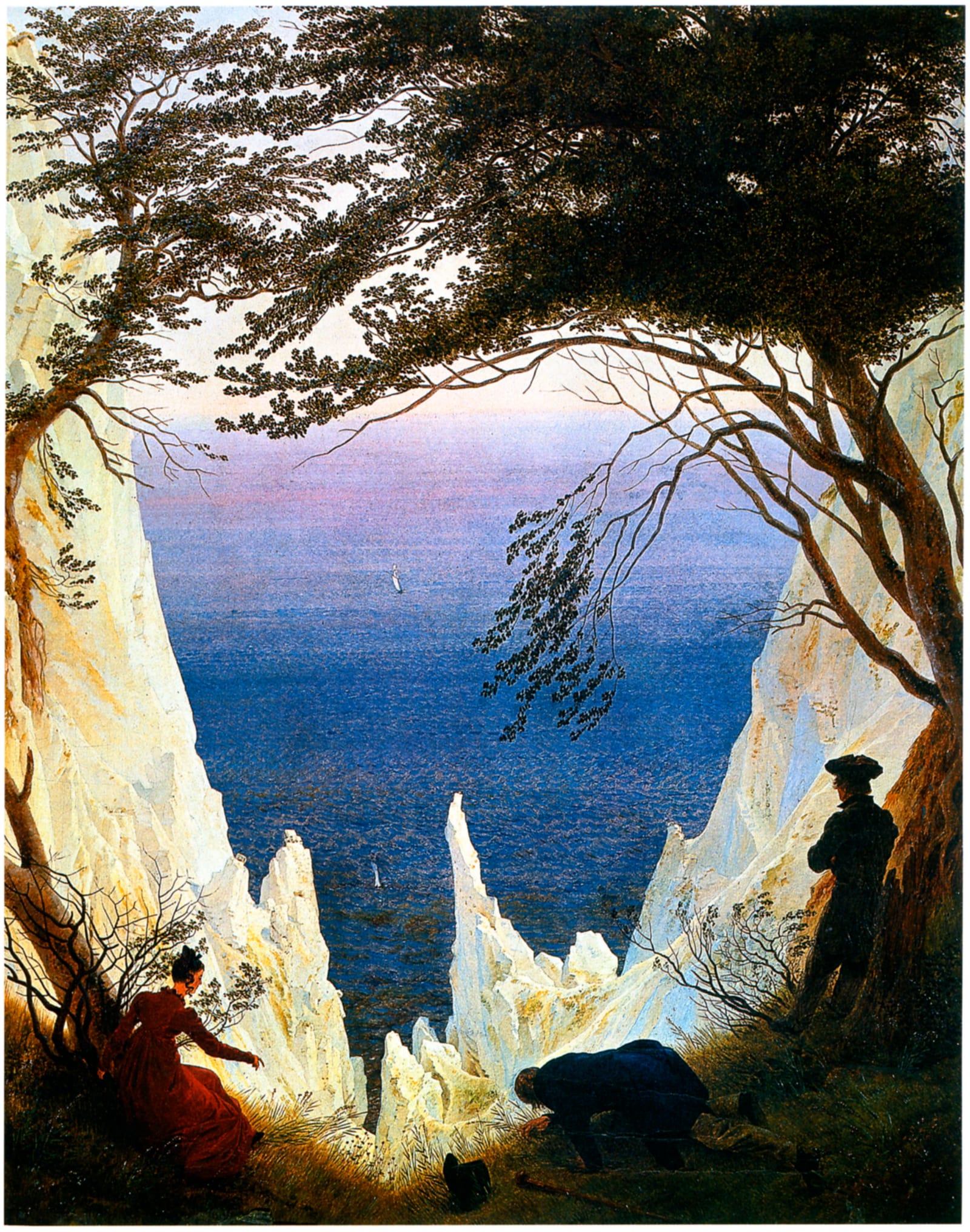
At the top of the market the subject follows the artist and the relationship, not the room; in the décor tier abstraction leads, then landscape, flowers and animals; in mass print, Impressionist reproductions. In AD Germany's September 2026 round-up a Berlin set designer hangs an oil by her husband, painter Dennis Rudolph, over the sofa; a 1970s Frankfurt flat hangs paintings by Kristina Suvorova; a Düsseldorf room keeps its furniture neutral and lets one painting by Model Rice carry the accent; a Munich attic flat credits Franz West via two Munich galleries 221. None of these homes names a retail wall picture, which suggests the original-versus-print line is the first filter at this tier; the sample is creatives and collectors, not affluent households at large 221. Prestige agrees: the Kunstkompass of November 2025 ranks Gerhard Richter first, as every year since 2010, and Georg Baselitz third 185; the Neue Leipziger Schule is the best-known figurative current, although its artists reject the label 186.
The décor tier reverses the order. Three self-representing painters' sites (XXL ART, Burgstallers-Art, Kriese) lead with fluid, spatula and action-painting abstraction, then landscapes, animals, flowers and portraits; three sites, not a census 3. IKEA.de's largest single pieces are Monet's 'Die Seine bei Giverny' at 118 × 78 cm for EUR 59.99 and Van Gogh's 'Sternennacht' for EUR 44.99 (September 2026) 164. The subjects mass retail prints, Impressionist landscape above all, are those iHomeArt paints as originals (Impressionist 246 works, Landscape theme) at the wall's size rather than a stock 118 × 78 cm.
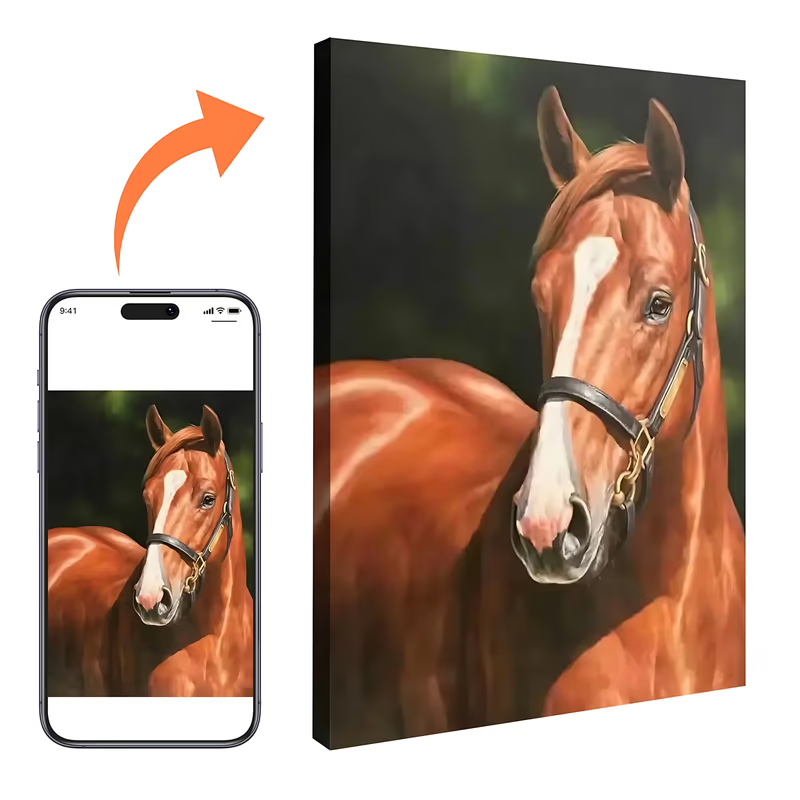
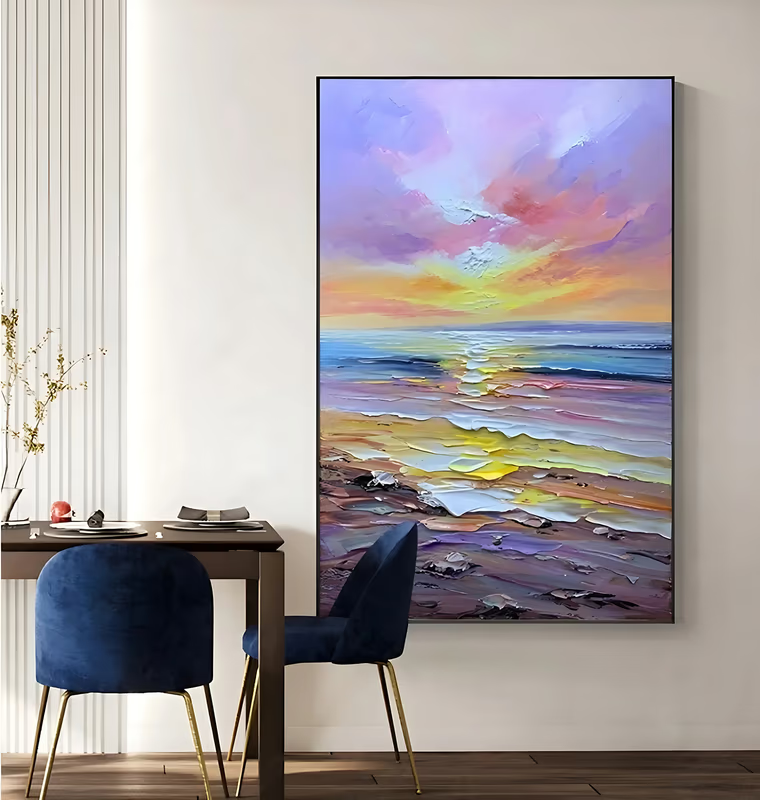
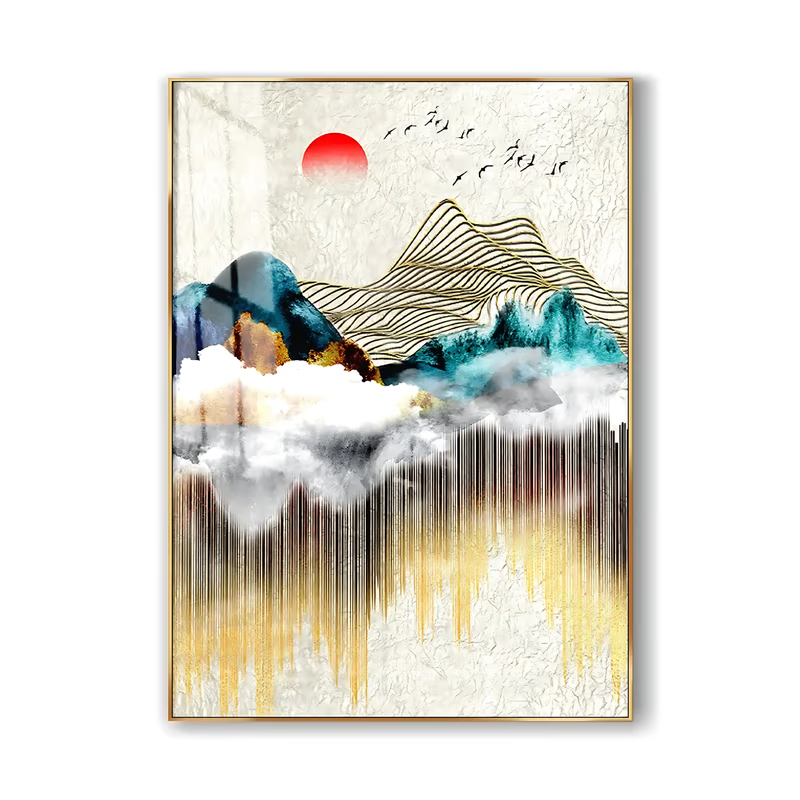
From the catalogue
Do alpine and folk motifs still work: the stag, Lüftlmalerei, the Herrgottswinkel?
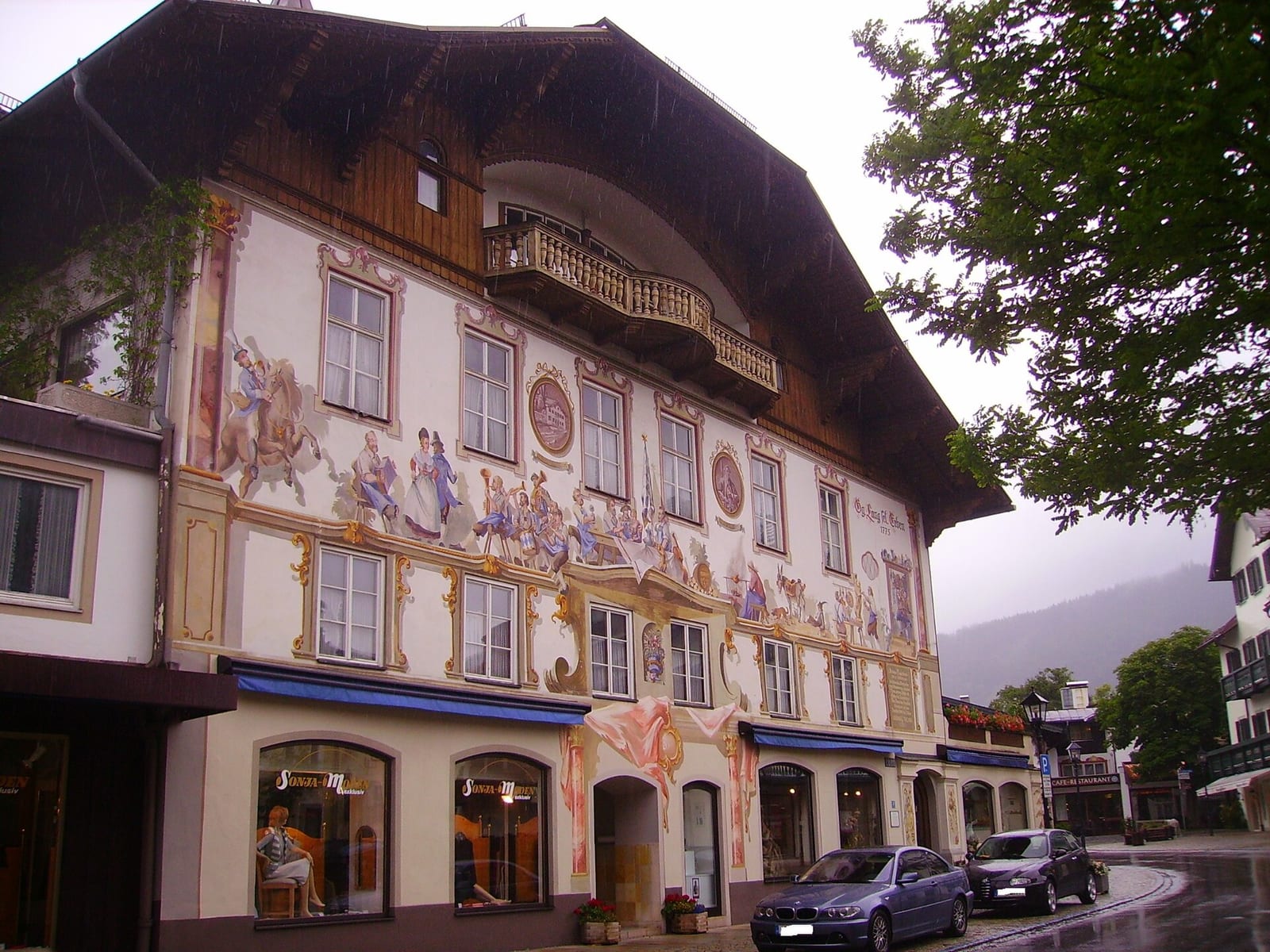
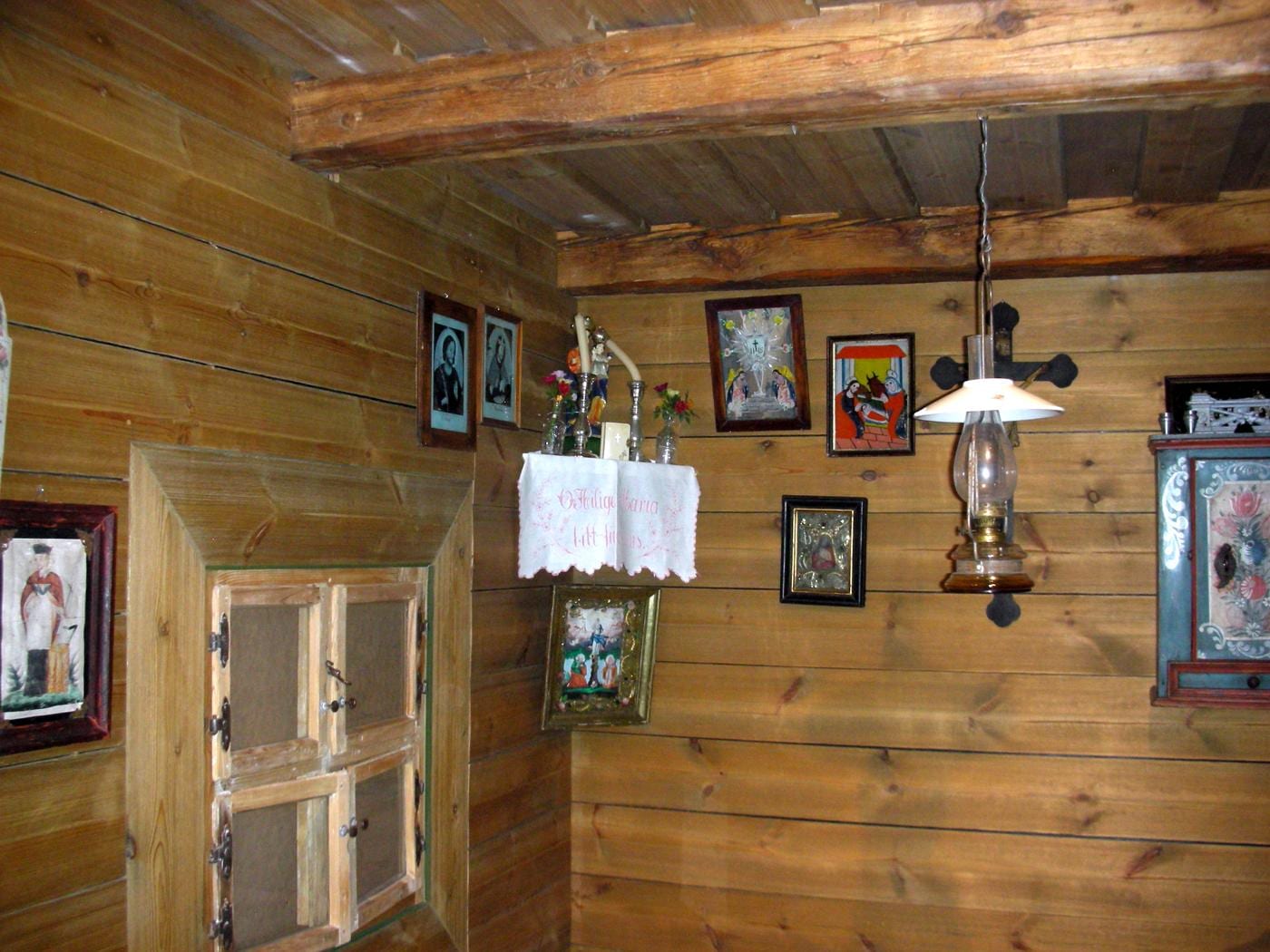
As stylised quotation, yes; as naturalistic revival, no. The 'röhrender Hirsch' (rutting stag) became mass wall art after 1870 through magazine reproductions and is now, in German usage, a byword for kitsch 62. The animal returns in another register: a wall-art retailer's October 2020 'Hüttenzauber' guide sells deer alongside edelweiss and antlers in brown, beige, wool-white, muted dark blue and soft pastels with red, green and yellow accents; one retailer's marketing copy, not a survey 63. Two southern traditions supply the vocabulary alpine-style rooms quote. The Herrgottswinkel, a corner with crucifix, Marian statue and holy pictures, has been the devotional focus of Catholic homes since the 16th century and remains common in inns across southern Germany and Austria; the source gives no figure for private homes today 60. Lüftlmalerei, the Baroque trompe-l'œil facade painting of Mittenwald, Oberammergau and Garmisch-Partenkirchen, mixes patron saints with hunting scenes and painted sayings; the original fresco technique now serves mainly heritage conservation, and a facade tradition bears on canvases only by analogy 61. For the catalogue: wildlife in earth tones, stylised rather than photographic, and texture in place of ornament.
Which colours do German rooms want on the canvas?
A warm neutral body with blue or green as the accent, and an open disagreement between sellers about which of the two sells. In a Deutsches Lackinstitut survey of 1,000 people aged 16–75 (undated, post-2014) blue was the favourite colour at 19%, then green 14%, red 13%, beige 10%; a general colour poll, not a wall-art preference 66. A Statista infographic of August 2017 found one in four living rooms painted white and beige-brown tones the favourite at 20%; nine years old, but it suggests canvases hang against warm neutrals rather than gallery white 67. Collectors can go further: the Frankfurt Gräflings wanted 'weg von den weißen Wänden als Bildträger' and restored sky-blue and lavender in clay plaster 222.
Seller trend copy for 2025–26 names terracotta, deep sage green and warm sand beige with ultramarine and lavender accents (Berlin online gallery, January 2025) 188 and calls 'Green with Sage' a perennial best-seller (paint brand, 2026) 158; against this, an online gallery owner wrote in October 2025 that customers prefer warm colours and 'Blau oder Grün werden eher seltener favorisiert' 187. Read together: warm base sells, cool accent is fashionable (inference). Hamburg's Strandhotel Blankenese (md, May 2025) runs an Elbe palette from soft blue to sand yellow and botanical green 84. In catalogue terms: Beige, Cream, Terracotta and Brown as the body; Blue, Teal or Green as the accent; Gold sparingly.

How much texture, and which finish?
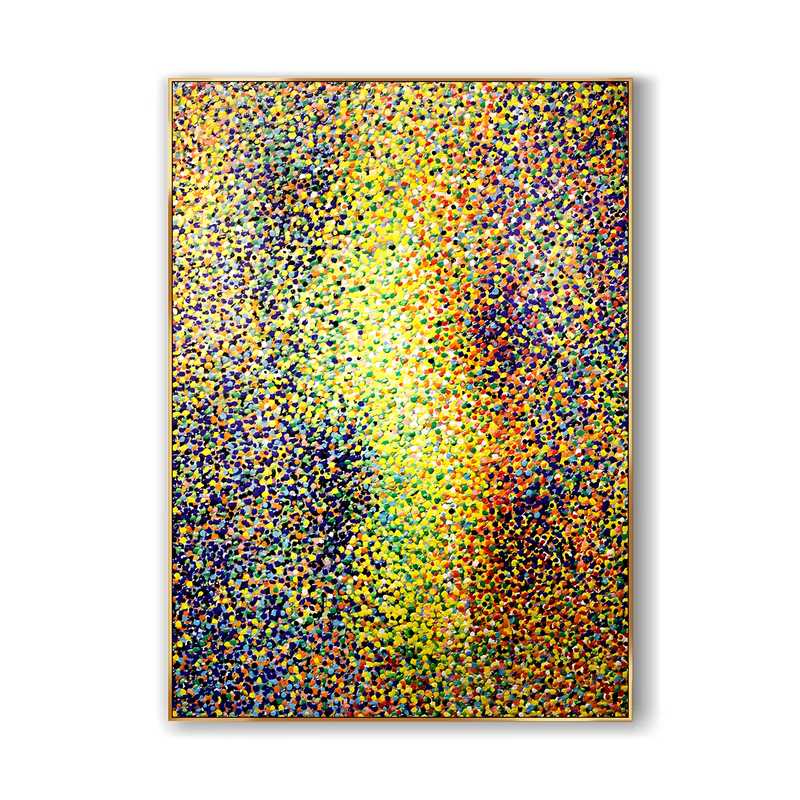
Relief sells at every tier, and the finish conventions are a floater frame and a certificate. At the top, Günther Uecker's nail relief 'Spirale' made EUR 400,050 at Grisebach's Berlin sale reported on 3 December 2024, bought by a German private collection 12. The décor tier sells the same surface cheaply: a 2025 retailer trend post names relief-like paintings and 'warm minimalism' the dominant styles 188; KUNSTLOFT's 'Ulterior Allure', 120 × 60 cm at EUR 239 (September 2026), builds its 3D effect from glitter, plastic and paper elements 196. The inference is that relief already reads as a value signal, so a plaster-textured original in sand, cream and terracotta competes on surface and wins on material.
The finish convention is the Schattenfugenrahmen, the floater frame with a shadow gap: a Raunheim workshop near Frankfurt lists custom black wood floater frames from EUR 69 for 30 × 40 cm to EUR 249 for 100 × 150 cm, stretching extra (September 2026) 180, and a workshop near Stuttgart stretches canvases up to 4 m 32. Signature and certificate are baseline, not premium: KUNSTLOFT bundles an 'Echtheitszertifikat' at EUR 239 196. iHomeArt's rolled, stretched and framed options and the signed certificate with every piece meet the convention; for 2 m+ work, shipping rolled for a local framer is a route German workshops already price.
What should a painting for Germany avoid?
Three things: looking like a print, looking like kitsch, and provoking in a shared corridor. The nude shows the last. In November 2014 Oberhausen removed three Maria Mancini nudes from the Technisches Rathaus after about 30 complaints, arguing that shows in public buildings 'dürfen nicht zu Verärgerung führen' 55; in April 2016 Berlin-Köpenick took two nude photographs out of a town-hall corridor although no one had complained 56. The body itself is not the issue: an unnamed 2014 study cited by German Wikipedia had about a third of respondents taking part in public nude activities 58; the inference is that figurative nudes belong in private rooms, not receptions. Corporate advisers say it plainly: in 2015 Munich consultant Donat Bailer's rule for firms was 'Nicht provozieren', no erotic or violent imagery 48. For hotels, consultant Eva Mueller's rules are no picture above the bed and hanging lower because guests see art seated or lying down 141.
The status sensitivity is strongest. An Otto.de reviewer praised a canvas because 'es ist kein blöder Druck' 149; newcomers want 'ein echtes Original' at roughly EUR 400–1,000, one gallery owner wrote in October 2025 187. Kitsch is policed by vocabulary: the stag 62 and 'Gelsenkirchener Barock', the label for ornament-heavy 1930s–1950s furniture still used to brand any furnishing as tasteless 64. None of the roughly twenty taste sources read mentioned religious or political constraints on home or office art; an absence in the sources, not proof of absence 187. Progress photos with stage-by-stage approval, signature and certificate are iHomeArt's answers to the print suspicion.


How do tastes differ by generation and by city?
Younger Germans say they want art, and want it abstract; most older Germans say they do not. In a Singulart-commissioned survey reported on 24 September 2025, 45.8% of 18–29-year-olds and 34.7% of 30–39-year-olds were interested in acquiring art, against 85% of 60–69-year-olds who were not; the young favoured 'moderne und abstrakte Werke oder Unikate von Nachwuchskünstlern'; the commissioner is a seller and no sample size is given 52.
Munich buys through galleries and advisers: the AD attic flat credits Franz West via two Munich galleries 221, and Stephanie Thatenhorst's show flat is hung by the advisory Martina Tauber Fine Art (September 2024) 71. Hamburg collects harder than it decorates: Sammlung Falckenberg holds about 1,900 works strong in Kippenberger, Meese and the Oehlens 201; a Blankenese villa by Fuchs Interiors is antiques and classic design 'with contemporary art' 205. Berlin hangs originals from its own network, a husband's oil, the owner's own picture 221; Kunstleben Berlin priced small originals at EUR 200–500 and the mid-range at EUR 500–3,500 in June 2026 173. Frankfurt is paper and colour: Deutsche Bank's towers devote each of 60 floors to one artist 183, paper being the collection's dominant medium 184, while the Gräflings paint their walls and hang Grace Weaver against them 222. Düsseldorf is a gallery town: Art Düsseldorf 2026 fielded 119 galleries, 19 of them local 231; Henkel's collection, hung for decades in the company's offices and corridors, is focused on abstract painting 251; The Wellem hangs HA Schult originals in guest rooms with an Art Concierge 140. The inference is that Munich and Düsseldorf expect an adviser or gallery in the loop, Berlin and Hamburg a story behind the work, and Frankfurt walls take colour.
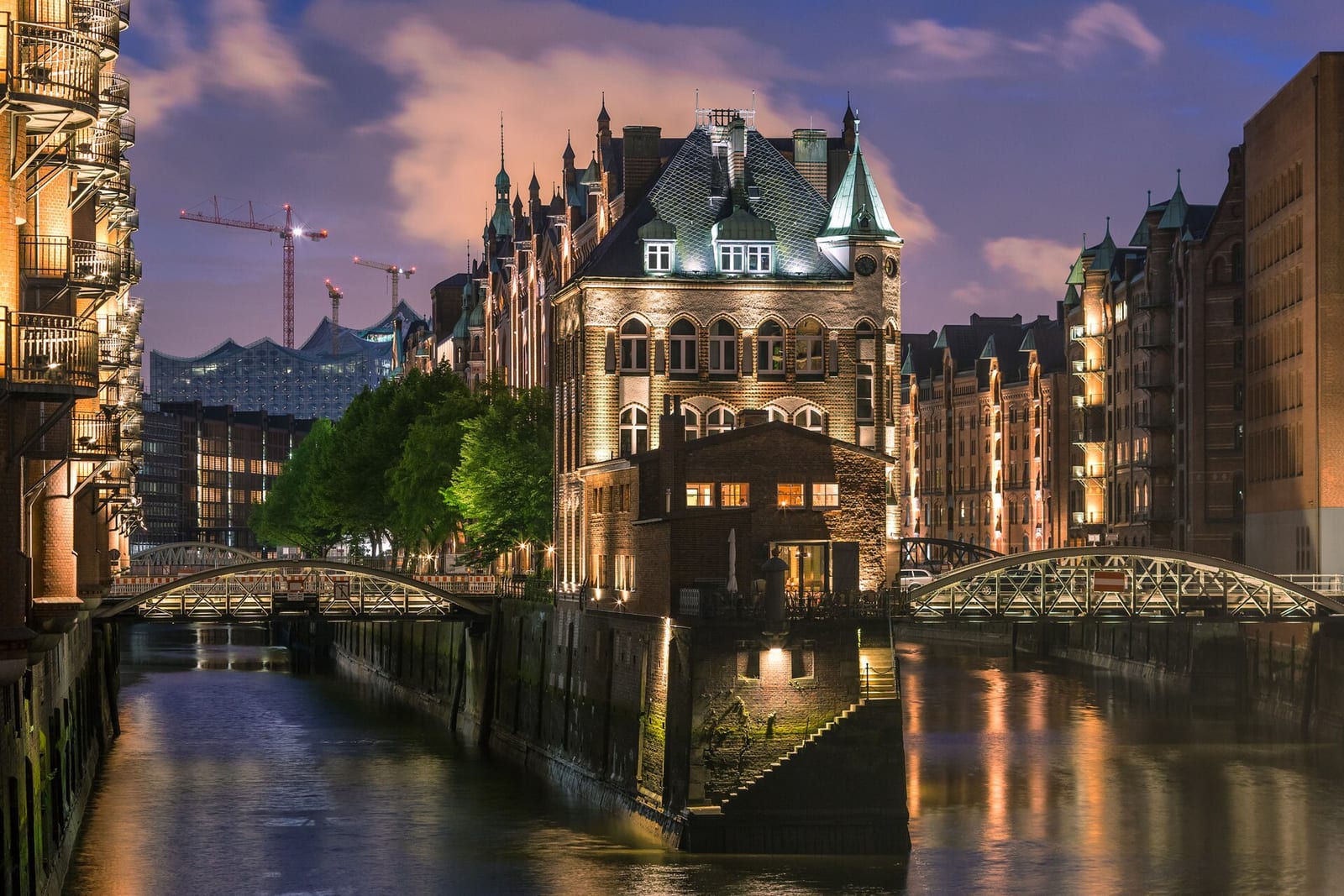

From the catalogue
Verticals painted at 250 cm and up for Altbau salons with 3.5 m ceilings and double-height stair halls 54
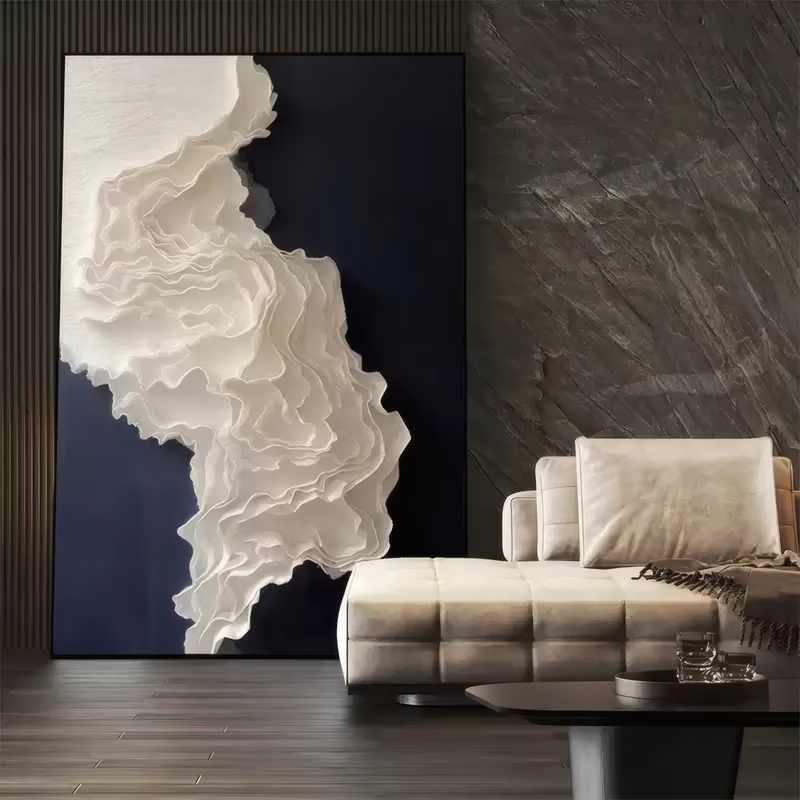
Seascapes in Elbe and North Sea colours — soft blue, grey, sand and white for Hamburg homes and hotels 115
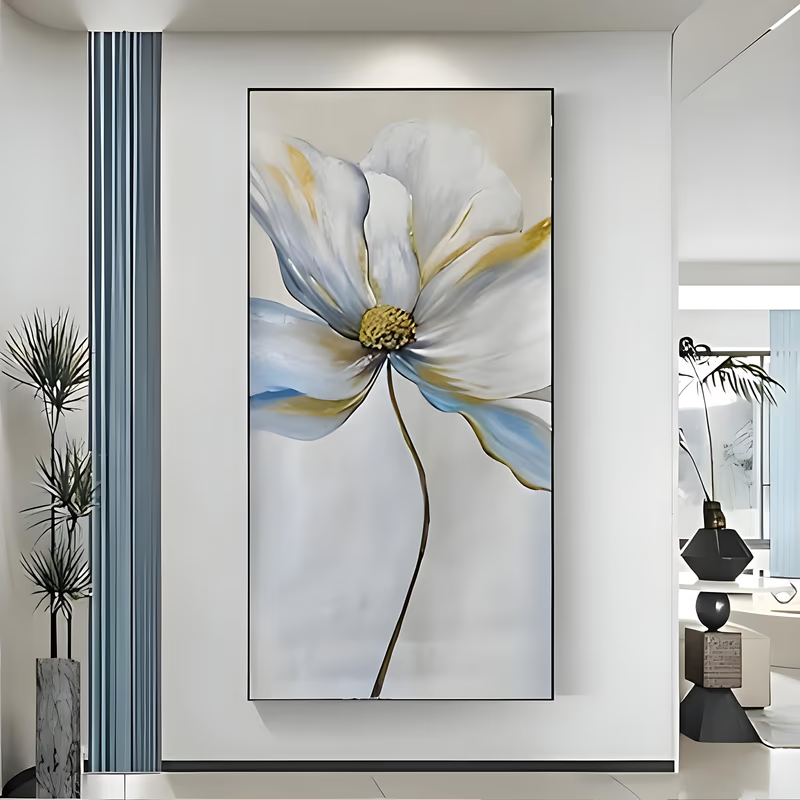
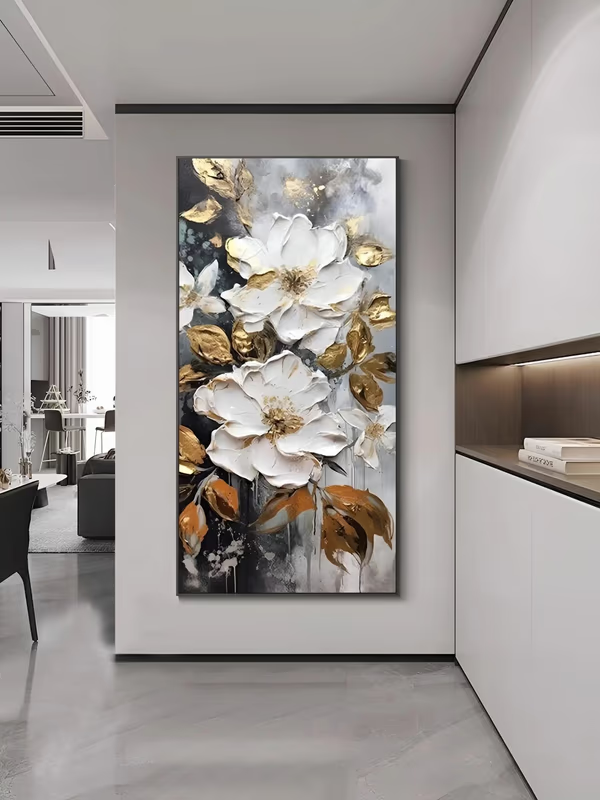
Contemporary Minimalist in white, cream, beige and grey — for the 'minimal wohnen' apartment 73
Questions buyers in Germany ask
- Is a hand-painted abstract from a German décor shop considered art?
- It sits in a separate tier. KUNSTLOFT's FAQ says catalogue works allow 'keine Größen- oder Farbvariationen' and commissions start at about EUR 700 with roughly 12 weeks' lead time 148; one gallery owner puts a newcomer's 'echtes Original' at EUR 400–1,000 187. Variation in size and palette is the dividing line.
- Which colour families are safest for a German living room?
- A warm neutral body with a blue or green accent. Blue (19%) and green (14%) led a Deutsches Lackinstitut favourite-colour survey of 1,000 people (undated, post-2014) 66; beige and brown were the favourite living-room wall colours at 20% in a 2017 Statista infographic 67.
- Are nudes a problem in Germany?
- Not in private rooms; in shared corridors and public buildings they are. Nude paintings were removed from Oberhausen's Technisches Rathaus in 2014 after about 30 complaints 55, nude photographs from a Köpenick town-hall corridor in 2016 with no complaint 56; a corporate consultant's 2015 rule was 'Nicht provozieren' 48.
- Do German buyers still want Impressionist landscapes?
- Mass retail says yes: IKEA.de's largest single pictures are Monet's 'Die Seine bei Giverny' at 118 × 78 cm for EUR 59.99 and Van Gogh's 'Sternennacht' for EUR 44.99 (September 2026) 164. The prestige register is painting too: Richter and Baselitz sit in the 2025 Kunstkompass top five 185.
- Is textured or relief painting a trend or a lasting taste?
- Both ends of the market buy it. Uecker's nail relief 'Spirale' sold for EUR 400,050 at Grisebach in December 2024 12; a 2025 retailer trend post names relief-like paintings a dominant style 188; a EUR 239 décor canvas builds its 3D effect from glitter and paper 196.
- Which finish should I specify for a German client?
- A Schattenfugenrahmen (floater frame) is the convention: a Frankfurt-area workshop lists custom black wood floater frames from EUR 69 for 30 × 40 cm to EUR 249 for 100 × 150 cm, stretching extra (September 2026) 180; a Stuttgart-area workshop stretches up to 4 m 32. A certificate is expected even at EUR 239 196.
- Is a stag painting a mistake in a German home?
- A naturalistic one probably is: the 'röhrender Hirsch' became mass wall art after 1870 through magazine reproductions and is now the German synonym for kitsch 62. Stylised deer in earth tones, however, are marketed by one retailer as part of the Hüttenzauber register alongside antlers and edelweiss 63; the catalogue answer is wildlife in earth tones, stylised rather than photographic.
Working with us from Germany
Send a wall size, a palette or a reference code. We quote within one business day, paint to your dimensions, send progress photographs for approval, and deliver free and insured in about ten to thirteen days.
Request a quoteSources
- Bilder 100x200 cm kaufen – XXL ART · 2026-09-18
- Ergebnisse der Winterauktionen – Grisebach press · 2024-12-03
- Rahmenkunst Unikum – Leinwandbilder aufspannen, Einrahmen · 2026-09-18
- LTO — Kunst in der Kanzlei: Was passt, und was lohnt sich? · 2015-03-12
- Umfrage: Junge Generation zeigt Interesse an Kunstkauf – retail-news.de · 2025-09-24
- Nackte Haut: Kunst im Rathaus muss weg – Abendzeitung München · 2014-11-26
- Streit um Kunstfreiheit: Rathaus Köpenick hängt Nacktfotos ab – Tagesspiegel · 2016-04-22
- Freikörperkultur – Wikipedia (de) · 2014 (study cited)
- Herrgottswinkel – Wikipedia (de)
- Lüftlmalerei – Wikipedia (de)
- Röhrender Hirsch – Wikipedia (de)
- Hüttenzauber – Einrichtungsideen aus den Alpen | Artgalerie
- Gelsenkirchener Barock – Wikipedia (de)
- Die Lieblingsfarbe der Deutschen ist Blau – Deutsches Lackinstitut · undated press release (post-2014)
- Wandfarben – Statista Infografik · 2017-08-16
- Design & Kunst zum (Er)Leben – Zu Besuch in der Show Flat von Stephanie Thatenhorst, München (AnneLiWest) · 2024-09-03
- Mut zur Farbe – Boutiquehotel stilwerk Strandhotel Blankenese (md) · 2025-05-05
- The Wellem Düsseldorf · 2026
- Kunst für Hotels | Eva Mueller Kunstberatung · 2026
- FAQ | KUNSTLOFT · 2026-09-18
- Kunden-Test & Erfahrungen zu KUNSTLOFT Gemälde Sommer auf der Haut 60x120 cm – Otto · 2023-09-19
- Living trends 2026: Current furnishing & colour trends – MissPompadour · 2026-09-18
- IKEA Deutschland – Bilder · 2026-09-18
- Kunstleben Berlin – Was zeitgenössische Kunst in Berlin wirklich kostet · 2026-06-11
- Art & More Rahmenwerkstatt – Schattenfugenrahmen · 2026-09-18
- Art in the Towers – Deutsche Bank · 2026-09-18
- Sammlung Deutsche Bank – Wikipedia (de) · 2026-09-18
- Kunstkompass – Wikipedia (de) · 2026-09-18
- Neue Leipziger Schule – Wikipedia (de) · 2026-09-18
- Mehr als nur Deko – Kunst macht eine Wohnung erst richtig individuell – Kunstplaza · 2025-10-18
- Bilder Trends 2025 & 2026: Moderne Kunst fürs Wohnzimmer – ysart.de · 2025-01-14
- Handgemaltes Gemälde 'Ulterior Allure' 120x60cm – KUNSTLOFT · 2026-09-18
- Sammlung Falckenberg – Wikipedia (de) · 2026-09-18
- Villa Hamburg – Fuchs Interiors on 1stdibs · 2026-09-18
- AD Magazin: Die schönsten Wohnzimmer Deutschlands: 9 persönliche Wohnwelten von Kreativen · 2026-09-01
- AD Magazin: Wohnung mit Kunst einrichten – so wohnen Johanna & Friedrich Gräfling · 2021-10-03
- Art Düsseldorf: Diese Galerien nehmen 2026 teil – Rhein-Ruhr-Magazin · 2026-02-05
- Henkel – Die Kunstsammlung – Kunstsammlung NRW · 2016-04-08
Researched 2026-09-19. Prices and figures are as published by the sources on the dates shown.