
Who this page is for
You run an art rental or leasing company. Your clients are offices, coworking operators, developers' marketing suites, law and finance firms, and now and then a hospital or a film production 2. They take art on a contract rather than buying it: typically 12 to 36 months 4, with the pieces rotated every three to six months 1, and a fee set as a share of each work's value, commonly in the range of 1.5–3% a month 4. That arithmetic makes the inventory the whole business. What a piece cost you, how many rotations it can serve before it looks tired, what you do when it comes back with a corner knocked in, and what you can hand over when a client decides to keep it all sit on the same balance sheet.
This page is about supplying that inventory. It is written for the buyer, curator or operations lead who is weighing three routes, consigning from artists, buying finished pieces from galleries, or building an owned stock of originals, and who needs a supplier that will still be painting the same codes in three years' time.
Not you? If you are furnishing your own head office, see corporate HQ and professional offices. If you select one programme per client and sell your judgement rather than an inventory, see art consultants. If you resell originals from a shop floor, see galleries and framers. If you supply hotel programmes as an intermediary, see hospitality art companies. Building owners refreshing their own lobbies are on commercial landlords and lobbies.
How do we build an owned inventory of originals without consignment splits or gallery prices?
The usual route is consignment: artists lend work to the rental company and take a share of every fee. In one documented model the annual charge is 10% of the work's market value, split between the company and the artist 2. It works, but the piece is never yours, the artist can withdraw it, and every rotation depends on what the roster happens to hold that month. Buying finished pieces from galleries gives you ownership, but at a price set for a private buyer, and a gallery cannot supply the same piece twice.
What we do is different in kind. iHomeArt is a studio, not a gallery: 1,455 original compositions, none of them held in stock, every one painted for the order that asks for it. That has three consequences for an inventory buyer.
- You own the piece outright. It is signed by the artist and ships with a certificate of authenticity. There is no ongoing split and no one can recall it.
- You can build in tranches. The minimum order is one piece, so a first order can be a single work in your own frame to test handling and finish. Volume pricing is tiered from 10 pieces per order, and each tranche is quoted within 1 business day, so stock can follow signed contracts rather than run ahead of them.
- Nothing sells out. Because every work is painted to order, the catalogue is a set of compositions rather than a shelf of objects. A code you bought in year one can be ordered again in year three, at the same size or a different one.
There is no public price list; every enquiry is quoted against the codes, sizes, finishes and quantities you send.
How do we keep a client’s walls changing every three to six months without the inventory ballooning?
Rotation is what the client is paying for 1. A client with 20 hanging positions needs 20 pieces they have not seen at each change, and across thirty clients the pool has to be wide enough that work can circulate without the same reception wall seeing the same painting twice in a contract. Breadth is therefore the first test of a supplier, and it has to be breadth in the kinds of work offices take.
The catalogue is indexed on 8 styles, 10 themes, 16 colour families, 9 moods and 4 orientations. The workplace slice is distinct from the hospitality slice: Workspace & Office (232 works) is led by Geometric (110) and by the Abstract style (99), Meeting & Boardroom (224) skews Peaceful and Calming (112 and 101) rather than loud, and Lobby & Reception (557) carries the Bold and Dramatic pieces (286 and 208) that a ground-floor client wants for a hero wall. Corridor & Circulation holds 435 verticals for the runs between meeting rooms.
Two studio routes stretch that pool further. Vary builds a family off one composition in named colourways, so one code can serve six clients' reception walls as related but not repeated pieces, and the same client on rotation sees a new colourway rather than a stranger. Recolour paints the same composition in a client's brand palette from fabric, paint or stone references; a piece painted to a client's own palette is a natural candidate for the purchase option at the end of the term. Both are described on custom & commission.

Can the whole inventory come in two or three sizes so frames and hooks swap between sites?
Every rotation is a de-install and an install. If the inventory shares a few sizes, the hooks stay on the wall, frames are interchangeable, crates are predictable and a van packs the same way every time. A consignment roster cannot give you that; painting to order can.
Each catalogue work lists the sizes it has been produced at before: 14 for vertical and horizontal works, from 61 × 51 cm (24 × 20 in) to 203 × 153 cm (80 × 60 in), and a separate set for panoramic works up to 127 × 254 cm (50 × 100 in). The list is a precedent, not a menu. We paint at the size you specify, so an inventory can be standardised on, say, 81 × 61 cm (32 × 24 in) for desks and corridors, 102 × 76 cm (40 × 30 in) for meeting rooms, 122 × 91 cm (48 × 36 in) for hero walls, and one panoramic width for receptions. Proportions are adjusted by the painter, not stretched.
| Finish | What arrives | Who does what | Typical use in a rental inventory |
|---|---|---|---|
| Rolled canvas | Unstretched canvas in a tube | Your framer stretches and frames to your standard frame stock | Firms with their own framer and a house frame profile |
| Frameless stretched | Stretched on bars, ready to hang | Installer hangs it | Coworking and creative offices where a frame is not wanted |
| Framed | Framed in gold, silver, black, white or wood, ready to hang | Installer hangs it | Black, white or wood for office inventory; gold or silver for hospitality clients |
We make no claims about frame durability under repeated handling; a rental inventory is hung and re-hung more than a hotel piece, so the sample order is the place to test your framer's profile against ours.
What happens when a piece comes back damaged, or a client wants to keep it?
Leasing contracts usually make the lessee liable for a piece that is damaged, lost or stolen 24, and the incidents that do happen tend to happen in transit rather than on the wall 2. For a consignment piece that is the end of the story: the artist's work is gone and the roster is one short. For an owned inventory from a studio it is a re-order.
Nothing is discontinued. Send the code and the size, and the same composition is painted again, signed by the artist and shipped with its own certificate, in the usual 10–13 days. It is a new original painted by hand, so it will differ slightly in brushwork from the piece it replaces; it is not a reproduction, and we do not sell prints.
Damage on the way to you is our problem, not yours. Shipping is free, fully insured and tracked by DHL, FedEx or USPS. If a piece arrives damaged: have the courier note it on the waybill, photograph the packaging and the piece, send us the photos, and keep both until the claim closes. We handle the carrier claim and paint the replacement. The full procedure is on logistics.
Lease-to-own. Most leasing contracts carry a purchase option with payments already made deducted from the price 4, and some rental firms run it as rental credits 3. When a client keeps a piece, you re-order the same code to fill the gap in the inventory, and the client leaves with a signed original and its certificate rather than a print.
What do we hand over when a client exercises the purchase option?
A client who converts a rental into a purchase wants to know what they now own. Every piece from us is signed by the artist and ships with a certificate of authenticity in the artist's hand, so the document exists from day one and travels with the piece through every rotation.
Behind the certificate: iHomeArt is the trade channel of Siji Art Hub in Foshan, Guangdong. The painters train inside the hub's exhibition programme, which has run more than 50 exhibitions with professors of the Guangzhou Academy of Fine Arts among the exhibitors, and the hub's own collection exceeds 11,000 works. Progress photos or video are sent as each piece is painted, and we only continue once you have approved the stage; those images can sit in the piece's file alongside the certificate.
For a top tier of an inventory there is a separate route. Master works by the hub's senior partnered artists are kept exactly as painted, with no resize or recolour, and carry provenance, exhibition history, a photograph of the artist with the work, and invitations to their shows. They suit the client who rents a boardroom piece with an eye to buying it. Details are on custom & commission.
What we do not do: we do not value works or set the market figure you charge a rental fee against, and we do not supply artist biographies, awards or named exhibitions beyond the verified facts above.
How an order runs for a rental inventory
- Brief. Codes or a shortlist, the sizes your frame stock uses, finish, colourways per code, quantity per tranche, and the delivery address (yours, your framer's, or a client site).
- Quote, within 1 business day. With a lead time. Volume pricing applies from 10 pieces per order; the tranche date is confirmed in writing.
- Sample. The minimum order is one piece, so a first order can be one work in your frame, hung and handled before the tranche is released.
- Paint, about 1 week per piece. Progress photos or video at each stage; we only continue once you approve. A colourway is corrected on the easel, not after delivery.
- Sign and certify. The artist signs the piece and its certificate of authenticity travels with it.
- Ship, 3–7 days. Rolled, stretched or framed; free, insured and tracked by DHL, FedEx or USPS.
One piece is 10–13 days door to door. The single-piece figure is not the tranche figure: send the quantity and the date you need it and the delivery date for the tranche is committed in writing at quotation. Payment is against a proforma invoice, with terms available on repeat accounts, which an inventory buyer ordering in tranches becomes quickly. Third-party delivery to a framer or straight to a client's site, in your country or another, is arranged at order stage; you remain the buyer and the party invoiced. The full terms are on trade.
What to send us for a first quote
Six things make the first quote accurate, so the first email is the last clarification round.
- Codes or a shortlist. Catalogue codes (for example WA#052, AA#047, IA#1088), or the room, style and mood pages you want us to draw from.
- Your standard sizes. The two or three frame sizes your inventory is built on, in cm or inches, and the panoramic width if you carry one.
- Finish. Rolled for your framer; frameless stretched; or framed in gold, silver, black, white or wood.
- Colourways. For each code you want as a Vary family, the number of colourways and any references (fabric, paint codes, stone) if a client's palette is involved.
- Quantities and dates. Pieces per tranche and the date each tranche has to be on your racks.
- Delivery address and consignee. Your warehouse, your framer, or a client site; and whether a sample piece is wanted first.
A spec line you can carry into your own inventory register reads: iHomeArt, code WA#052, Wabi-Sabi, grey and beige geometric, 81 × 61 cm (32 × 24 in), black frame, signed by the artist, certificate of authenticity supplied, painted to order. Replace the code and the size per piece; the rest stays the same across the inventory.
Where to start in the catalogue for a rental inventory
The tiles below are live counts from the catalogue, chosen for what offices, meeting rooms and receptions take. Start with the room pages, then narrow by mood or style. Two honest notes on depth: Workspace & Office is 76% vertical (177 of 232), with only 11 horizontal and 10 panoramic works as painted, so wide formats for a reception desk or a long meeting-room wall are a Resize job on a vertical or panoramic composition rather than a filter result; and Contemporary Minimalist within Workspace & Office is a modest 27 works, so a minimalist-led inventory should also draw on Wabi-Sabi and the neutral end of Abstract.
For coworking lounges and breakout areas, which are furnished more like living rooms than offices, the Living Room tag (855 works, 343 of them Uplifting) is the deeper pool, and 291 works carry both the Living Room and the Guest Room & Suite tag, useful where clients include serviced apartments.
From the catalogue
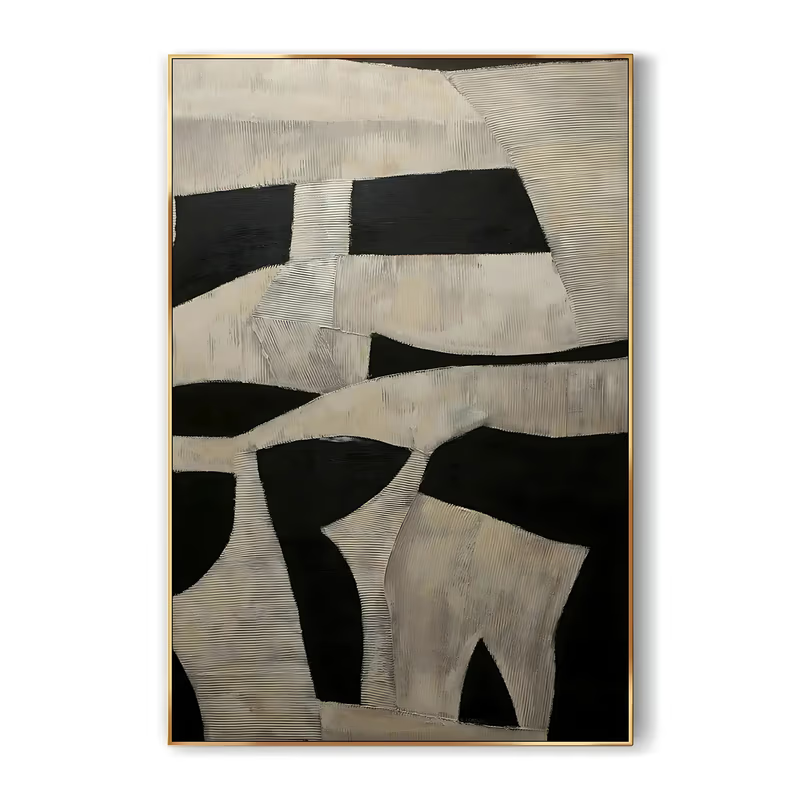
Workspace & Office, tagged Bold 128
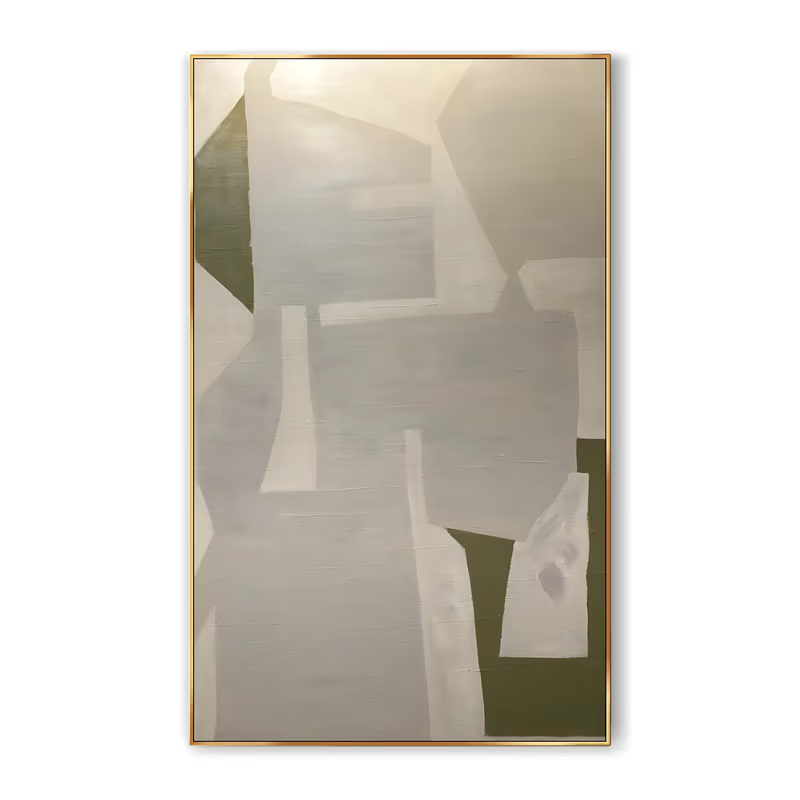
Workspace & Office, tagged Calming 41
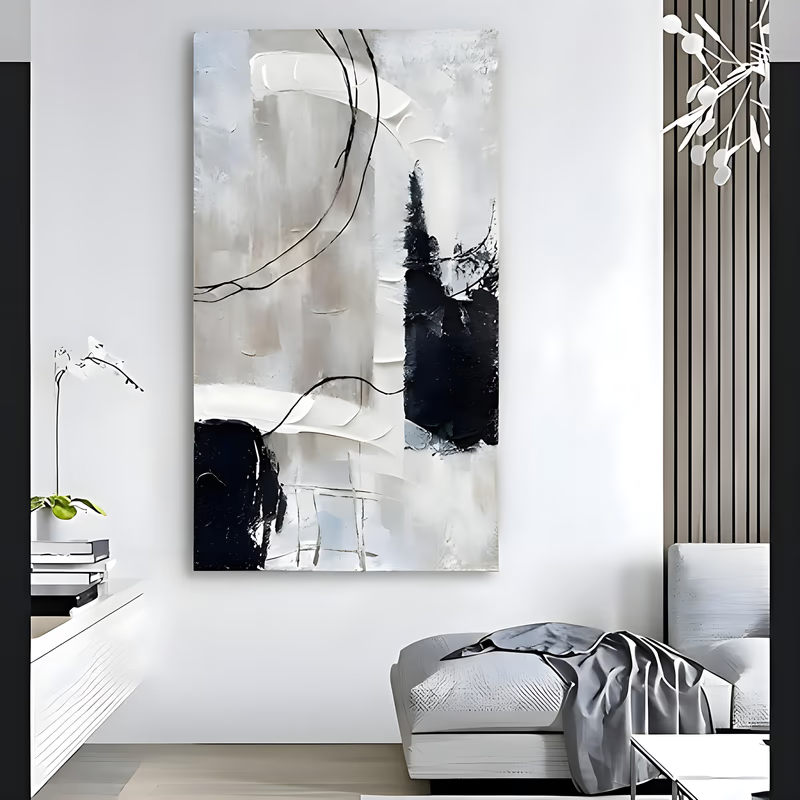
Textured & Plaster for meeting rooms 52
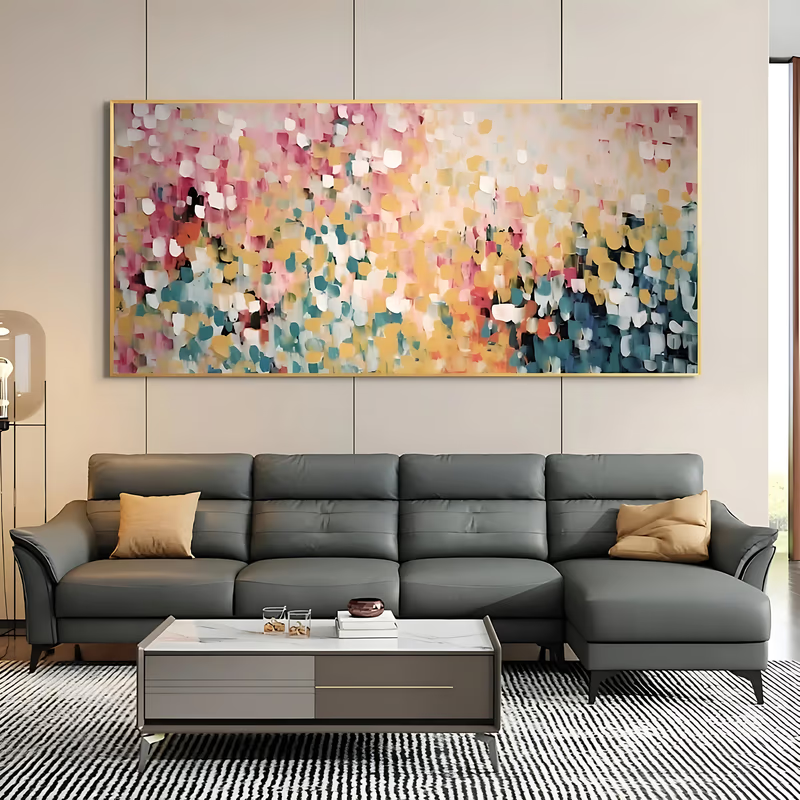
Lobby & Reception, panoramic as painted 95

Corridor & Circulation, vertical 435

Contemporary Minimalist for offices (the thin cut) 27

Square formats for offices 34
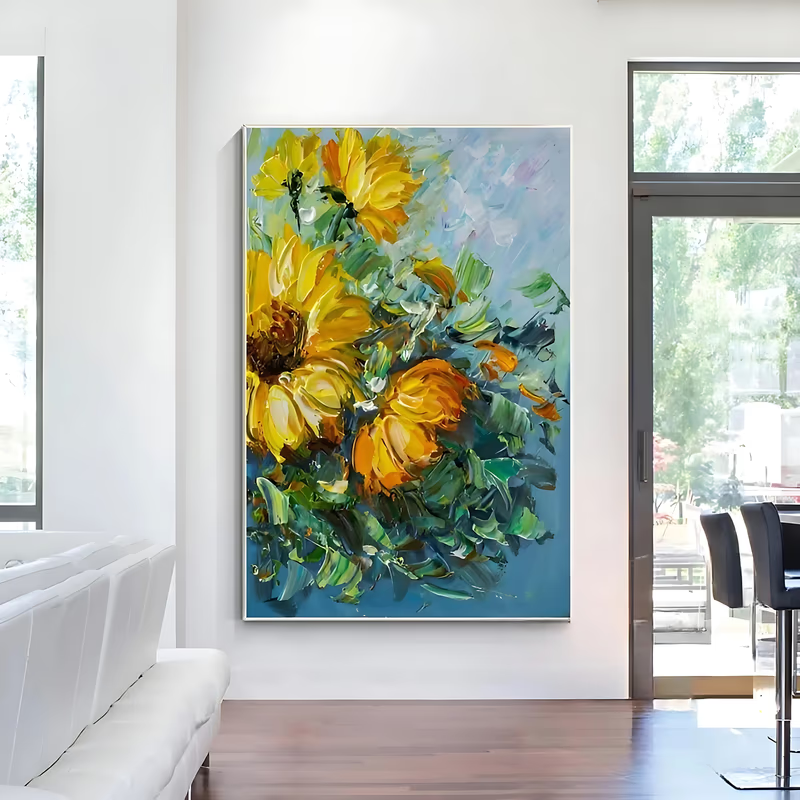
Living Room, tagged Uplifting (coworking lounges and breakout areas) 343
Also for: set decorators, event hire and staging inventories
The same inventory logic applies to three neighbouring businesses that hire art out for days rather than months. Film and television production companies rent art for sets on an average term of under a week 2, event and exhibition contractors dress venues for a launch, and home-staging firms hold a stock of pieces that moves from property to property. What they have in common with an office leasing firm is that pieces are handled constantly, sizes need to be interchangeable, and a damaged or sold-on piece needs to be replaceable with the same composition.
Everything above applies: minimum order one, volume pricing from 10, any size, framed in black, white, wood, gold or silver or rolled for your own framer, and any code painted again when the inventory is one short. For set decorators the practical point is that each piece is an original painted for your order and signed by its painter, with a certificate naming the work, rather than a licensed image. Staging companies have their own page at home stagers, which covers residential palettes and the show-home sizes that sell.
A 58-piece starter inventory for a rental firm serving offices and coworking — illustrative schedule built from catalogue codes, not a client project
An illustrative schedule built from catalogue references, not a client project. Every piece would be painted to the wall's own dimensions.
| Space | Work | Size | References |
|---|---|---|---|
| Sample, one piece in the firm’s own frame | Grey and beige Wabi-Sabi geometric to test frame profile and handling — qty 1 | 81 × 61 cm (32 × 24 in), rolled | WA#052 |
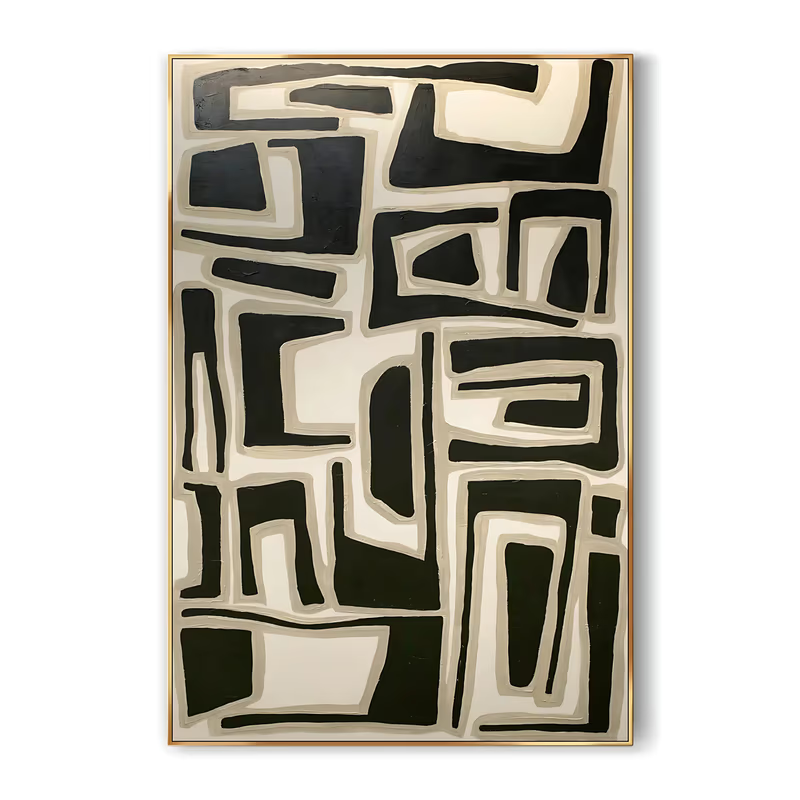
| Desk-area and corridor tier, four Vary families of six colourways | Grey/beige geometric, beige-and-black dry-brush blocks, sage plaster fan shells, black line loops on beige — qty 24 | 81 × 61 cm (32 × 24 in), black frame | WA#052, AA#047, TA#017, MA#775 |
| Meeting-room tier, three families of six | Teal-and-green colour fields, multicoloured knife-dot mosaic, blue palette-knife skyline — qty 18 | 102 × 76 cm (40 × 30 in), black frame | AA#909, CA#975, IA#1143 |
| Boardroom tier, calm pieces, two colourways each | Gold sunrise over a lake, draped cream and green plaster folds, green mountain ridges under a pink sky — qty 6 | 122 × 91 cm (48 × 36 in), white frame | IA#1198, TA#016, TA#013 |
| Reception hero tier, panoramic | Pink-and-yellow colour blocks, grey-and-yellow textured skyline, four colourways each — qty 8 | 76 × 229 cm (30 × 90 in), frameless stretched | AA#081, IA#1088 |
| Ground-floor client, one hyperrealist panoramic as painted | Peacock among peonies and magnolia, one hyperrealist panoramic for a reception with a purchase option in the contract — qty 1 | 114 × 229 cm (45 × 90 in), wood frame | HA#046 |
| Total | 58 pieces from 13 source works, each signed with its own certificate; quoted as one project with volume tiers; tranche dates committed in writing; any code re-ordered singly when a piece is damaged or bought out | — | — |
Questions art rental & leasing companies ask us
- Where do art rental companies buy their inventory, and can we buy from you directly?
- Most rental firms consign from artists, paying a share of each fee, or buy finished pieces from galleries 2. You can buy from us directly as a trade account: original hand-painted works, minimum order one piece, volume pricing from 10 per order, quoted within 1 business day, owned outright with no ongoing split.
- If a rented painting is damaged or a client buys it, can we get the same one again?
- Yes. Nothing in the catalogue is discontinued because nothing is held in stock; every work is painted to order. Send the code and size and the same composition is painted again, signed and certified as a new original, in about 10–13 days. It will differ slightly in brushwork from the piece it replaces.
- Can every piece in our inventory be painted at our two standard frame sizes?
- Yes. The sizes listed on each work are precedents, not a menu. Tell us the sizes your frame stock uses, for example 81 × 61 cm and 102 × 76 cm, and every code is painted to them with the composition adjusted by the painter rather than stretched, so frames and hooks swap between client sites.
- Do the pieces arrive framed and ready to hang, or do we frame them ourselves?
- Either. Framed pieces arrive ready to hang in gold, silver, black, white or wood; frameless stretched pieces arrive on bars; rolled canvas arrives in a tube for your own framer to stretch into your house profile. Many rental firms use rolled for volume and framed for hero pieces.
- Are these originals or hand-embellished prints?
- Originals. We sell no prints and hold no stock. Each piece is painted by hand for the order, signed by the artist, and shipped with a certificate of authenticity in the artist’s hand. Progress photos or video are sent during painting, so you see the piece being made before it ships.
- What can we tell a client who wants to buy the piece at the end of the lease?
- That it is an original hand-painted work, signed by its artist, with a certificate of authenticity, painted by artists who train inside Siji Art Hub’s exhibition programme, which has held 50+ exhibitions with Guangzhou Academy of Fine Arts professors among the exhibitors. We do not supply valuations or artist biographies beyond that.
- Can one composition be varied so several clients get related but different pieces?
- Yes. The Vary route paints one catalogue composition in a set of named colourways, so a family of six can serve six clients’ reception walls without repeating, and a client on rotation can see a new colourway of a piece they liked. Each is still an individually painted, signed original.
- How fast can we restock 20 pieces after signing a new client?
- One piece is about a week to paint plus 3–7 days in transit, 10–13 days door to door. For a 20-piece tranche, send the quantity and the date you need it and the delivery date is confirmed in writing at quotation. Shipping is free, insured and tracked by DHL, FedEx or USPS.
Start an enquiry
Send reference codes, a brief, a palette or a photograph of the wall. We quote within one business day, paint to your dimensions, send progress photographs for approval, and deliver free and insured in about ten to thirteen days.
Request a quote